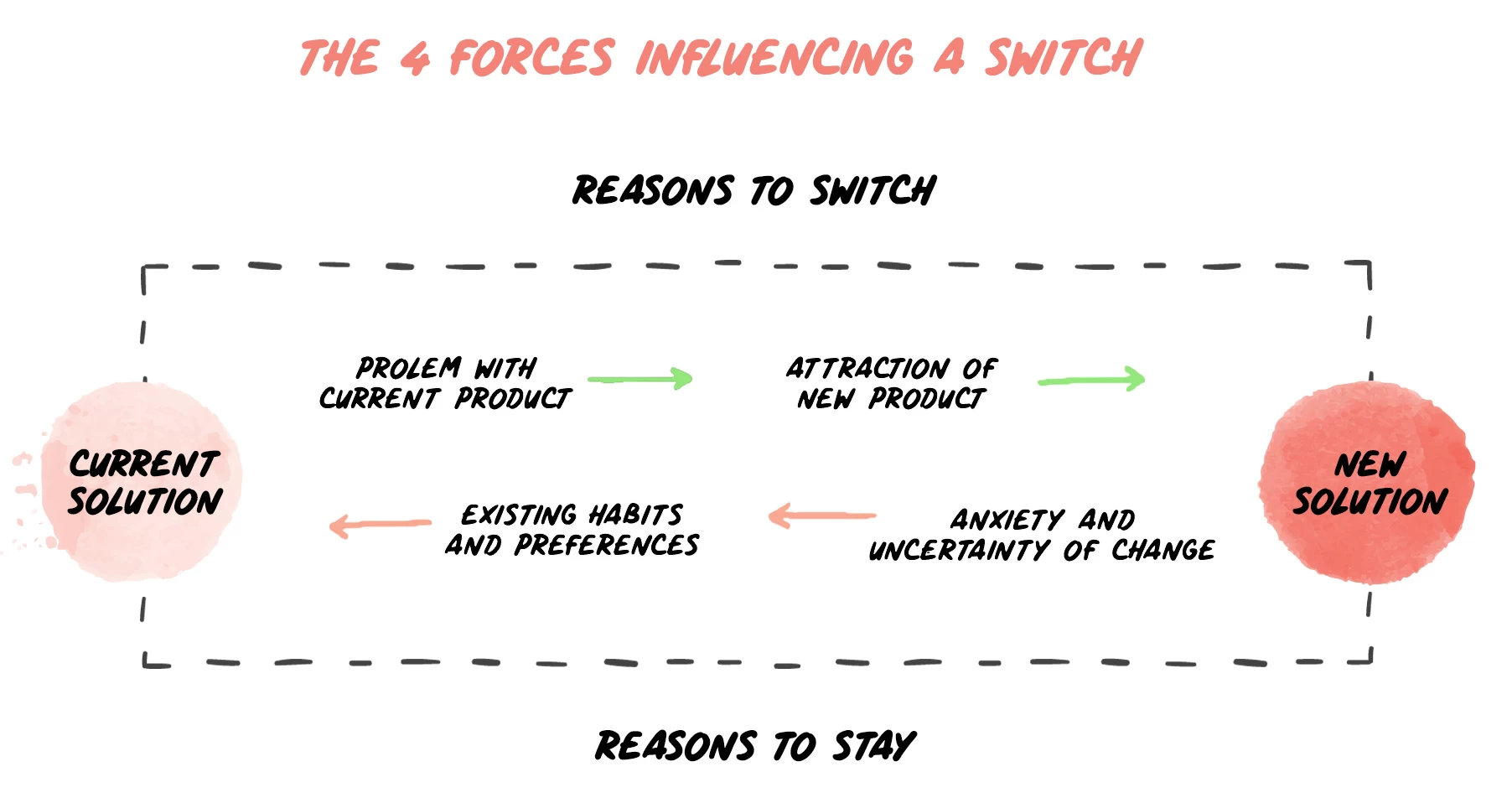
We will always be more comfortable with what already exists, even if it's 💩.
Typically, we are not actively looking for better ways to solve problems we face. And this could be due to a number of reasons.
Sometimes, we don't even realise how bad or time-consuming the experience is because we are so used to it. It's just the way it is, and we become blind to it. Do you consider brushing your teeth to be a problem? Probably not now; it's a ritual, something that needs to be done. But, in the future, once our teeth are automagically cleaned, we'll look back and think, I can't believe we used to do this twice a day.
There are situations when there might be better, faster ways to achieve the goal. But we still prefer not to do anything about it because the problem is not a big deal.
Then you might recognise it's a problem; it's annoying, but it happens once a year (hey, tax return), and you can't be bothered investing your time in alternative ways to do it more efficiently.
Even if you recognise that this is a part of your life you'd like to improve, you start looking for ways to make it better, and then you experience familiarity bias - a phenomenon in which people tend to prefer familiar options over unfamiliar ones, even when the unfamiliar options may be better.
Then you need to allocate the time required to learn about the new solution and have anxiety about a new solution - is it going to work? How much is it going to cost me?
No wonder they say your product experience needs to be 10x better for people to switch to or consider a product, as they are generally resistant to change, and for them to overcome the inertia of the status quo, the new offering must be substantially more attractive.
Remember how we used to book a taxi over the phone to pick you up at 5:00 am to get you to the airport, and when it's 5:01 am, the taxi isn't there, and your anxiety goes through the roof thinking: "Damn, the taxi isn't coming, is it?" The solution of seeing how far away my taxi is and what the ETA is was a 10x better experience, and that's why Uber was so successful in growing.
It's hard to change people's habits and behaviors. But hard doesn't mean impossible. It's challenging and has a lot of constraints. Constraints inspire creativity. Creativity leads to innovation. And you are very lucky if you manage to create something truly innovative in your professional career. Even if it's 2x better experience.