I'm a father of three from Sydney, a Product Director and a Product Coach. I write about product management and run the Product Manager community.
Subscribe to receive digest emails (1 per month).
  1. Bold ideas unlock progress.

    When crafting new products or features, it's easy to focus on safe, incremental improvements. These solutions feel achievable and practical but they rarely break new ground.

    Adding a bold concept into the mix forces the team to think beyond limitations. Even if the daring idea doesn't make it to launch, it creates a spark. It pushes boundaries, reshapes how problems are viewed and reveals opportunities overlooked in safer designs.

    A bold solution isn't just a backup plan. It's a catalyst for better work.
    Dec 15, 2024
  2. Osaka at night feels alive. The big glowing Running Man sign in Dotonbori lights up the busy streets. Food stalls fill the air with yummy smells.
    Osaka at night

    Night life in Osaka
    Dec 14, 2024
  3. Good managers know when to step back.

    Intervening too often stifles creativity, ownership and morale. Teams thrive when leaders provide clear direction, trust their abilities and give them space to execute. Micromanagement creates bottlenecks, while autonomy pushes innovation and accountability.

    The best work happens when leaders empower, not overshadow.
    Dec 14, 2024
  4. Visited Osaka Castle. The castle has been destroyed and rebuilt multiple times due to wars, lightning strikes and natural disasters. The current structure dates back to 1931.
    Osaka Castle

    Osaka Castle
    Dec 14, 2024
  5. Trust between a founder and their first Head of Product defines whether a startup scales or stalls.

    Founders often start as the Head of Product, driving vision, roadmaps and hiring. But as a company grows, splitting attention across fundraising, culture, operations and strategy leaves product leadership exposed. Bringing in a Head of Product isn't just inevitable - it's essential. The challenge is doing it without breaking the momentum or diluting the founder's vision.

    Alignment is the foundation. A great Head of Product doesn't just execute - they embody and challenge the founder's instincts, building scalable systems around them.
    Dec 14, 2024
  6. In Osaka today.
    Fun fact: Osaka brought the world the sushi train in 1958!
    Osaka
    Dec 14, 2024
  7. Leaders thrive on connection. Taking time to engage with teams builds trust and fuels collaboration.

    The risk lies in misreading commitment. Valuing late nights over outcomes sends the wrong message, tying effectiveness to hours rather than impact.

    Great leadership doesn't trade presence for results. It inspires through balance and focus.

    One of the smartest things the new CEO did was start an “open door” policy. His version of that was walking around and getting to know people, but also inviting anyone and everyone to stop by his office after 4 p.m. to talk; there was no agenda. He let them know that he would stay as late as necessary if they wanted to chat. Many nights he didn't leave the office until 8 or 9 p.m.

    David Rohlander, The CEO Code

    Dec 13, 2024
  8. Japan's mastery of small-space solutions shows in designs like a basket under a cafe chair and an umbrella holder. These simple ideas maximise convenience and keep spaces uncluttered.
    A chair in Japan
    Dec 13, 2024
  9. A team doesn't always need a dedicated product manager.

    In startups, founders often take on this role naturally, using their deep understanding of the market and their vision for the product.

    In larger companies, if the team already has a strong handle on strategy, data and market needs, they can absolutely operate without a formal PM. However, someone still needs to take charge of the product function - making prioritisation decisions clear and aligning the team around common goals.
    Dec 13, 2024
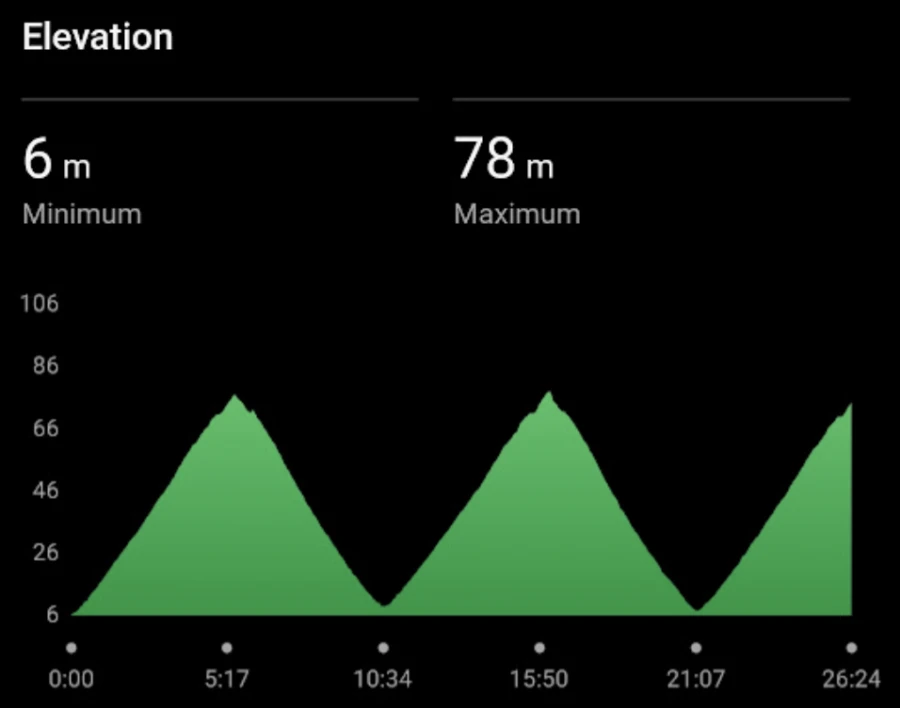
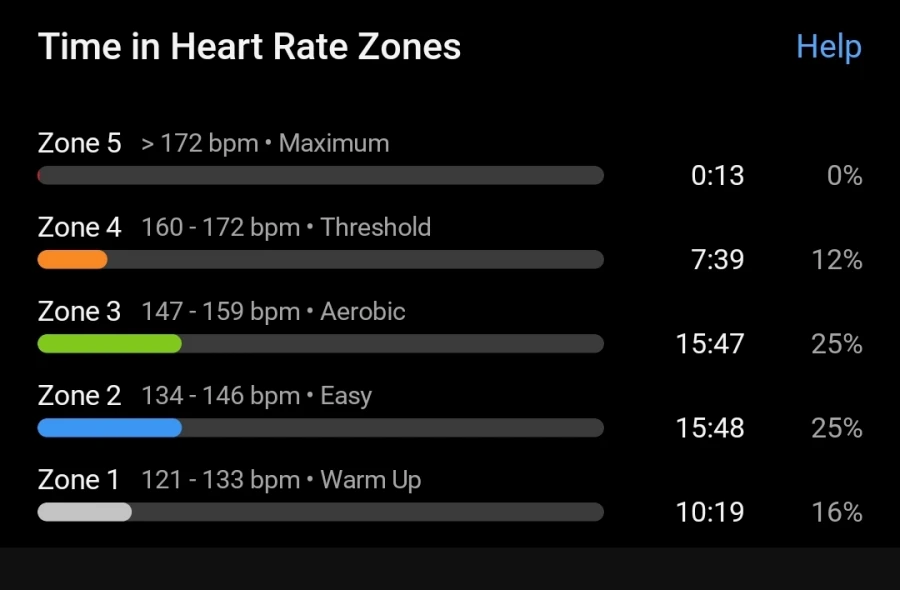
  10. I had a lovely 11km walk (included a nice hill climb) over two hours from the hotel to Fushimi Inari Taisha, one of Japan's most iconic Shinto shrines in Kyoto.
    Fushimi Inari Taisha. The Torii Gates

    The pathway up Mount Inari is lined with over 10,000 torii gates, each inscribed with the donor's name and the date of their donation.
    Fushimi Inari Taisha. Kyoto View

    The shrine itself extends across Mount Inari, with the summit standing at around 233 metres - a great workout!

    Scattered throughout the grounds are stone fox statues, which are considered messengers of Inari. Many of these foxes are depicted holding keys in their mouths, symbolising the key to a rice granary.
    Fox Statues (Kitsune)

    The fox statues wear bright red scarves as a way to show respect and thanks to the spirit they represent. The red colour is also thought to keep away bad spirits and bring protection.
    A walk to The Torii Gates
    Dec 13, 2024
  11. Kyoto tower

    Visited Kyoto Tower (131 metres tall, completed in 1964, inspired by a candle-like design). While it's undeniably an iconic structure, the observation deck was surprisingly small, with a ceiling so low I could touch it with my hand.

    Despite being built to withstand earthquakes and typhoons, the slight movement of the deck was noticeable - which definitely freaked out Em a bit!
    Kyoto Tower View

    Kyoto Tower
    Dec 12, 2024
  12. Feature prioritisation isn't always about frameworks like ICE (Impact, Confidence, Effort), Kano or MoSCoW.

    Sometimes, it's about building momentum - creating buzz, lifting your team's morale, staying ahead of competitors or even strengthening internal relationships.

    The challenge is finding the balance between chasing these quick wins and staying true to your long-term vision.
    Feature prioritisation isn't just frameworks. It's balancing quick wins for momentum with staying true to your long-term vision.
    Dec 12, 2024
  13. Nijō Castle, built in 1603 as a residence for Shogun Tokugawa Ieyasu, is a place best experienced in person. Its cypress-wood architecture and extensive gardens are amazing, far beyond what photos can convey.
    Nijō Castle. The moat

    Nijō Castle Garden

    Nijō Castle. View from the ruined tower.

    Nijō Castle Garden
    Dec 11, 2024
  14. I've applied for the Sydney Marathon 2025.

    Now that it's a major event, you have to apply and hope for the best to secure an entry. Fingers crossed!

    Sydney Marathon 2025
    Dec 11, 2024
  15. Takeaways: "The Cold Email Handbook"

    I recently read The Cold Email Handbook and since my experience with cold emails is pretty limited, it was a good deep dive into how things work at scale. One of the biggest challenges is how often yo... Read more
    Dec 11, 2024
  16. One of the biggest game-changers in my career has been learning to think through writing. I used to spend so much time just “thinking” about problems without making any real progress.

    Now, I write the problem down. I refine it, tweak it, explore it from different angles, visualise it and ask ChatGPT for new angles. Once that's clear, I map out ways to solve it - my plan. But I don't stop there.

    Real understanding of the problem comes through action. Progress brings the most valuable insights.

    Problem-solving isn't linear. You can't fully define a problem until you start solving it and you can't predict when it'll be fully defined - or resolved.

    Clarity comes as you move forward.
    Dec 11, 2024
  17. The first full day in Kyoto, a city home to over 1,600 Buddhist temples and 400 Shinto shrines.

    Busy Nishiki Market on Monday morning.
    Nishiki Market in Kyoto


    There are many wires hanging from the poles. I'm not sure why they don't bury them underground - perhaps it's due to earthquakes.
    Kyoto - cables


    The city has strict height restrictions, preserving its low-rise, picturesque views.
    A street in Kyoto


    A road sign that looked like an alien holding a child.
    Kyoto - Zombie Dad


    And the streets here? They're typically narrow and quiet.
    kyoto - typical street


    Fushimi Inari Shrine at night
    Fushimi Inari Shrine at night
    Dec 10, 2024
  18. Mistakes teach faster than manuals. But only if they're visible. And shared before they sit quietly and start to build up.

    When a leader owns a mistake in front of their team, something powerful happens. The room relaxes. People stop pretending everything is perfect. They stop tiptoeing. It sends a message that trying, failing and learning is part of the job - not a threat to it.

    Most teams don't freeze from lack of skill. They freeze from fear. Fear of saying the wrong thing. Fear of trying something new. Fear of being the only one who didn't get it right. But when a leader steps up and says, “Here's what I got wrong, here's what I learned and here's what I'm changing,” that fear starts to fade.

    Because the next time something goes sideways, there's no hiding. You've already shown how it's done - how to take ownership, how to bounce back.

    But don't overdo it. This isn't about dumping your insecurities on your team or confessing every minor wobble. It's not a therapy session. Oversharing makes people uneasy.

    So keep it simple. Share what's useful. Wrap it in action. Frame the mistake as a lesson, not a spiral. Make it clear you're learning faster than before - and pulling the team forward with you.

    Mistakes teach faster than manuals. But only if they're visible
    Dec 10, 2024
  19. Japanese post boxes are delightfully short. Their tops barely reach belly-button height.

    This compact design is no accident. It prioritizes accessibility, ensuring children and wheelchair users can easily reach them.

    Japanese post boxes
    Dec 10, 2024
  20. Seth Godin & Lenny

    Branding: A Promise Kept Every Time
    A brand isn't a logo. It's a promise. In a crowded AI market, success isn't about having AI - it's about solving problems. Loyalty comes from defining a clear promi... Read more
    Dec 9, 2024