I'm a father of three from Sydney, a Product Director and a Product Coach. I write about product management and run the Product Manager community.
Subscribe to receive digest emails (1 per month).
  1. There is no shortage of software.

    AI can already compare features, prices and reviews across ten competitors in about 30 seconds. If your differentiation isn't immediately readable, it gets skipped.

    What stays rare? Trust. Community. Things that are harder to copy than code and I'm not sure I have a complete list. Those are the ones I keep coming back to.

    The founders positioned well right now aren't always the ones with the best product. They have a point of view their customers already believe. A reputation that does the trust work before the sales conversation. Something people would follow to the next thing they built.

    Figure out the one belief your best customers hold that your product is built around. What do they think is true about how work should get done or what's broken or what matters? If you can't name it, your messaging is probably under-working. People tend to share things they believe in. Start there.
    5d ago
  2. "Wait, I thought we agreed on this..."

    You did, but memory is a terrible place to store a decision.

    Decisions that live in a meeting disappear.

    They flash through a thread on Slack. Everyone agrees. Someone says: "Let's do it." The week goes on.

    Someone asks a few weeks later: "Wait, I thought we were doing X?"...and you're back in the room again.

    Verbal decisions are shared memory. And memory changes. Especially when things are tough. Especially when the team is moving quickly, there's too much going on, and no one wrote anything down.

    I've seen founders talk about the same thing 3 times without realising it, not because the team wasn't paying attention but because there was nothing holding the decision in place.

    Putting it in writing changes the rules. You just need one place where choices are saved. What you decided. What you're not doing. Why. Who owns it. Written two minutes after the meeting.

    Something changes when it's written down: assumptions surface, trade-offs become visible and (most importanly) people stop debating what was said and start acting on what was decided.

    The difference is usually one document that everyone knows about. Clarity builds. So does confusion.

    Which one you're feeding right now is the one running your team.
    Mar 4, 2026
  3. The Agency Got the Instincts. You Got the PDF.

    You paid for research. Someone else got the instincts.
    You open your email and see the PDF from the agency. It has clean design. Graphs in pastel colours. 47 slides with themes, personas, quotes and j... Read more
    Mar 3, 2026
  4. Your Team Stopped Believing "For Now" a Long Time Ago

    "I'm still across the product for now."
    Your team hasn't believed "for now" in a long time.
    They know. They can see your calendar. They keep an eye on every choice you make. They don't ask why things ... Read more
    Mar 2, 2026
  5. So old

    I definitely think twice about it when I'm coming up with a file name.
    Feb 25, 2026
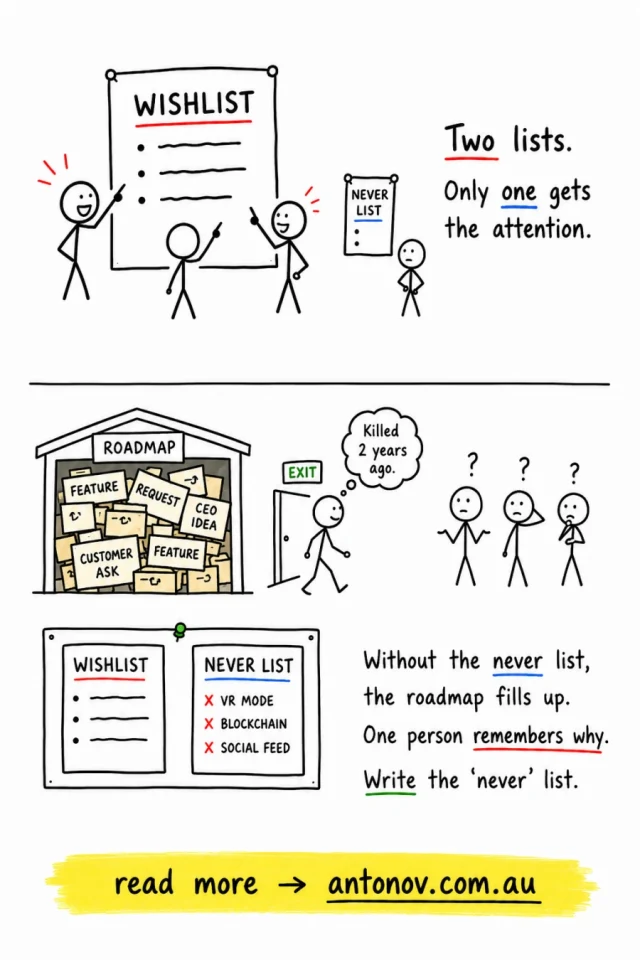
  6. As the cost of writing code trends toward zero, the backlog explodes. Every feature becomes rent you have to pay.
    Feb 24, 2026
  7. After more than 10 years of building online products as a product person, here's what I've learned:

    Everyone is making guesses.
    The CEO is making guesses about the vision and strategy.
    Salespeople are guessing what people want.
    Investors are making guesses about scale.
    You guess how big an impact it will have and what should be built next.

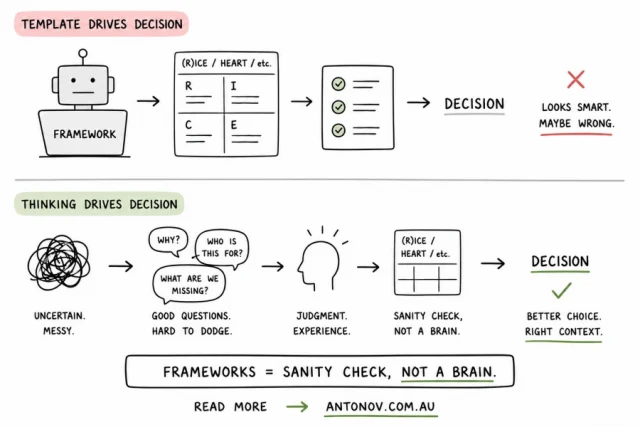
    TAM models, the ICE framework, roadmaps and discovery sprints all sound sophisticated, but they're still just a bet.

    Your mentor doesn't know if your feature will improve retention.
    The 'expert' on LinkedIn can't tell you if your market is big enough.
    You don't know if this sprint will make customers behave differently.

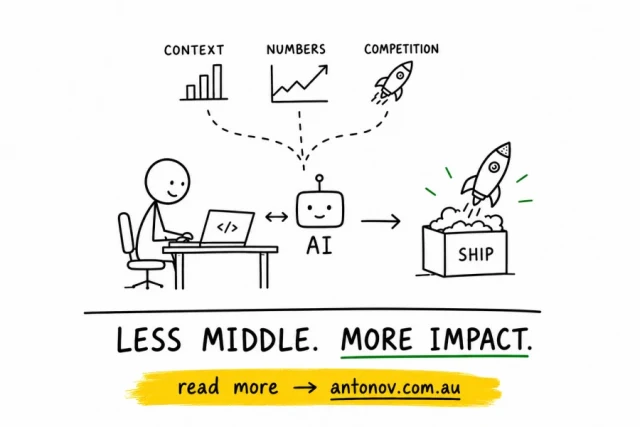
    The only way is to keep shipping and keep the build cost low.
    Feb 23, 2026
  8. AI Just Removed the Waiting. Now What?

    The other day, Luke Wroblewski wrote something that made me think not only about how AI speeds up teams, but also about how it changes the way software is made and sold. Most teams don't realise how b... Read more
    Feb 22, 2026
  9. AI Agents Don't Care About Your Polished UI

    I've noticed something in my own behaviour (and I'm sure you have too) over the past few months. I open fewer apps and I don't use Google as much.
    Instead of jumping between tools, I just dictate an e... Read more
    Feb 19, 2026
  10. The best way to interview Product Managers

    I've run a lot of PM and product design interviews. Most optimise for hypotheticals: “What would you build?” or “How would you approach X?”
    They test theory in a frictionless world. Real product work ... Read more
    Feb 15, 2026
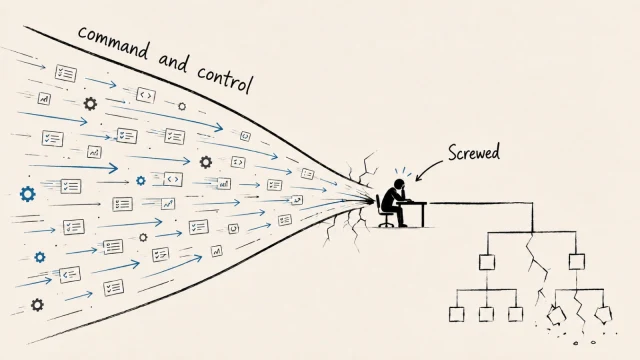
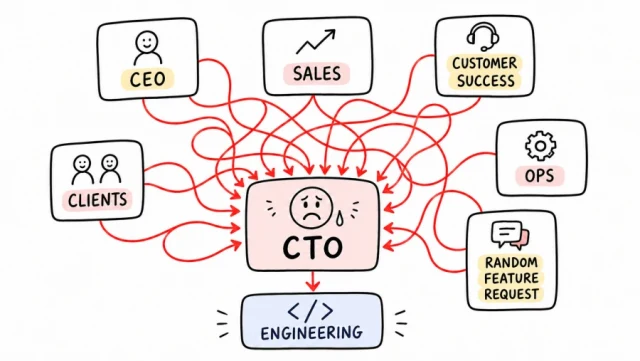
  11. The best way to get alignment is for someone to own the call, make the decision, and move everyone forward. It doesn't come from talking things through forever.

    Long discussions feel safe. They even feel (mistakenly) like progress. But they slow everything down.
    Like a slow-mo scene from The Matrix.
    I hate it.

    Clear decisions are risky and a bit scary. But they give your team the direction it needs.

    Do this If you want faster and cleaner decisions:
    • End every meeting with one line: “Here's what we're doing.”
    • Give every decision a single owner. No committees.
    • Set a deadline to review the outcome, not to keep debating.
    Jan 28, 2026
  12. Simple Strategy by Netflix

    An exciting strategy is something that people look forward to. The all-hands meetings, the inspiring slogans, the promise that this next big bet will change everything.

    But real strategy doesn't spar... Read more
    Jan 17, 2026
  13. Get comfortable being uncomfortable

    When a Product Manager gets comfortable with predictability - hitting deadlines and running smooth sprints - they sometimes find themselves locked into what's safe, just keeping the engine running and... Read more
    Jan 6, 2026
  14. WFH

    When work moved home, we lost something special. The hallway high-fives, lunches together, quick smiles across a desk and the shared buzz of a team in the same room. Even sticky Post-it notes were kin... Read more
    Nov 23, 2025
  15. Leave PMs alone!

    When you're part of a good 1:1 product management community, it keeps you away from quietly losing your marbles.

    One of the most common topics that surfaces is the time wasted managing expectations ... Read more
    Nov 22, 2025
  16. Some organisations want innovation, but they don't want the risk. They need to show ROI before proceeding.

    But that's the true cost of innovation - you don't know if it will result in anything. There's a chance, but it's low.

    You can't test, learn, or grow without spending time/money. Without breaking things. Progress looks chaotic up close. And sometimes expensive.
    Nov 11, 2025
  17. Disagreement is proof you've hired thinkers, not AI bots. If everyone nods along, you've built a cult, not a team.

    Debate, decide, act, and make a difference in the world.
    Nov 1, 2025
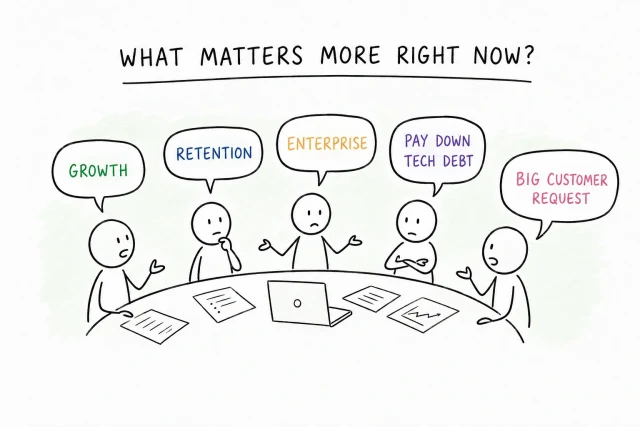
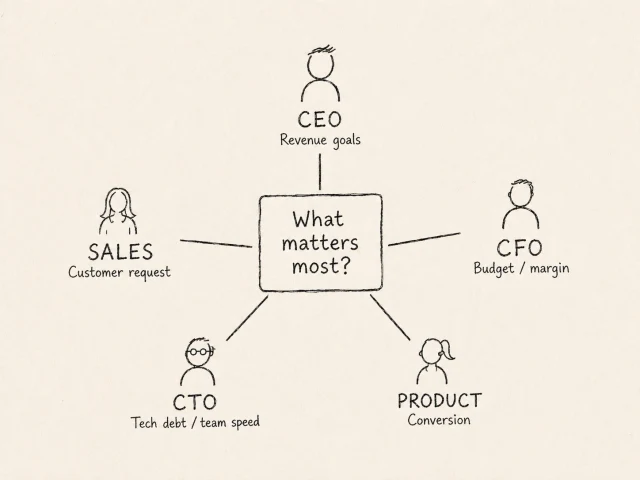
  18. Everything a CEO does can be boiled down to 3 main things: Setting direction, enabling people, and driving outcomes.

    The best leaders know which of these matters most at any given time, and they shape their schedule around it.

    Companies led by someone who understands that balance have a clear edge over those that don't.
    Oct 25, 2025
  19. When the newborn comes into your life, everything changes. It doesn't matter what your current habits are - your fitness, your diet, your time with your wife - it all kind of goes out the window. Everything starts shifting around the newborn: the schedule, the mayhem, the process of learning their personality and cues - are they hungry or just needy?

    Then you start figuring out the schedule. In the first stage, you barely sleep, and both of you attend to the baby, which quickly becomes unsustainable. So you start adjusting, taking turns, shifting things around to make it work.

    Everything shifts around the baby, and you end up giving up on the small things - even something as simple as going out for a walk, let alone exercising.

    Two weeks in, though, you start to really enjoy the moment. You realise it's a new life - a new person with their own personality, thoughts, and habits. It's amazing to watch it unfold.

    But it's also important not to forget everything else. Once you've got a bit more structure in your schedule, start bringing back those other habits - eating properly, going out, spending time with your wife, exercising, looking after yourself, and maybe spending a bit more time on your side projects too.
    Oct 22, 2025
  20. Only recently, I thought I didn't have time. I knew that would change soon, and I also knew I'd adapt - especially since I've done it twice before.

    My third daughter (yep, I'm a girl dad) was recently born and already seems to be the boss.

    In between naps, feeding, and endless nappy changes that look suspiciously like mustard, I'm doing a couple of extra things:
    • building a community of product managers and;
    • creating a flashcard system in Notion to help me memorise things I want to learn, from historical dates to topics related to my job - assuming I can stay awake long enough to use it.
    Oct 20, 2025