Leaders have a tail.
Your words stick. A small comment can spark clarity, confidence or momentum days later.
Tip: If something matters - say it twice. Let the tail carry it further.
I'm a father of 3 from Sydney, a Product Director and a Product Coach. I write about leadership, product management and the messy reality of making work work.
I'm currently building and experimenting with a mildly alarming number of things.
Subscribe to the best posts on product, strategy, and AI. Just one email a month.
Leaders have a tail.
Your words stick. A small comment can spark clarity, confidence or momentum days later.
Tip: If something matters - say it twice. Let the tail carry it further.
Not sure your strategy is clear?
Ask 3 people to explain it back.
If the answers don't match, your strategy isn't working - it's just words on a page. Rewrite until their answers sound like a chorus. Strategy isn't just about direction. It's about shared language.
Block 1 hour a week to watch support tickets or user interviews.
Don't delegate it. Don't skim AI summaries. Watch raw moments - confusion, frustration, workarounds, and aha moments. Then write down one insight. Just one.
That habit alone will sharpen your product instincts faster than any strategy workshop.
The best leaders simplify trade-offs.
They don't avoid the tough calls. They make the path feel obvious - even when it isn't.
Don't just ask: “Why now?” Ask: “What gets dropped if we do this?”
Passionate founders can find a hundred reasons why everything matters. Revenue. Growth. Strategy. Buzzwords galore. But trade-offs force clarity. If nothing gets cut, it's not a real decision.
Async creates space for sharper thinking.
So before booking your next meeting, try writing instead. Start with a proposal. Add context. Share trade-offs. Then pause. Let people digest, reflect and reply in their own time. The best ideas often come from the second draft, not the first reaction.
A strong leader multiplies effort into outcome. A weak one multiplies uncertainty into noise.
Start coaching with curiosity. Don't tell them what to do. Ask what they're trying to achieve. What's blocking them? What are they unsure about? Where do they want to grow?
Then shut up.
Listen. Let them think it through. Let them fumble. Hold back your instincts to solve it for them. Because your job isn't to be the smartest voice in the room. It's to help them hear their own.

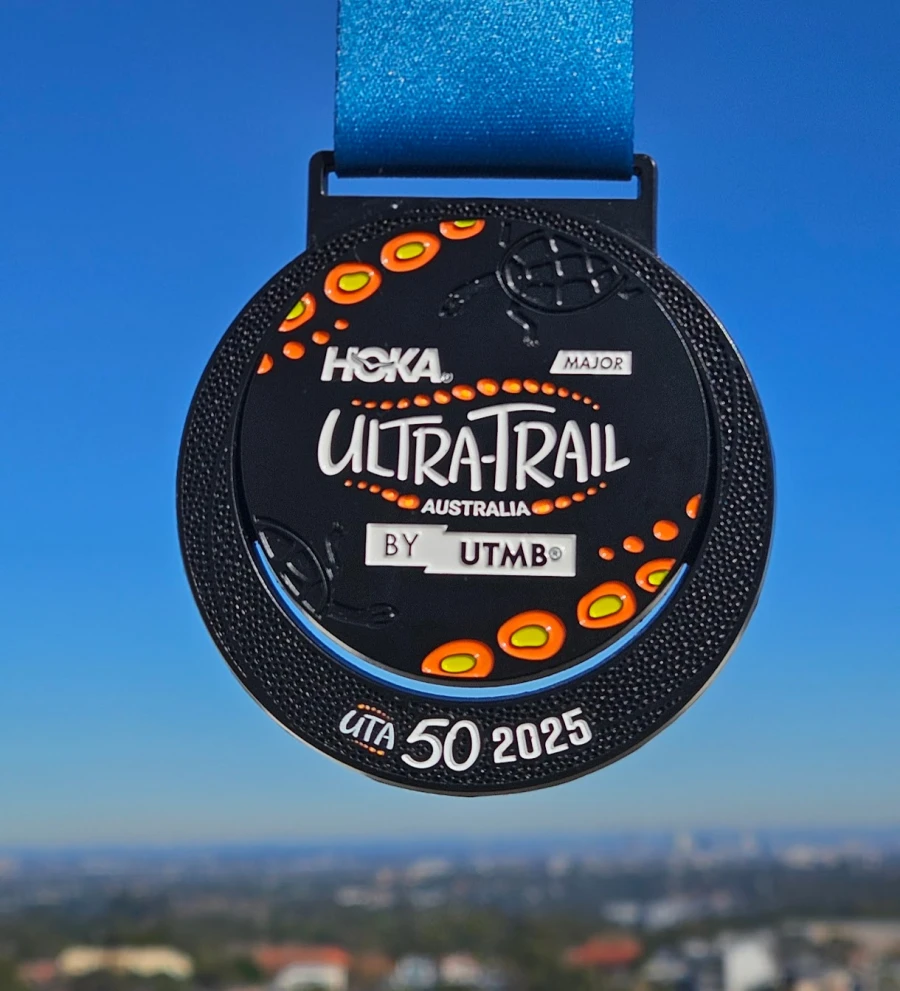
✅ Finished UTA50 in 9 hours and 53 minutes.
Tough course - pretty gnarly at the bottom, and I saw a lot of runners twisting their ankles. The weather was clear and kind, but the course itself was brutal. Still, the atmosphere was amazing. So many positive vibes - not just from spectators cheering you on and chanting your name, but also from fellow runners cracking dad jokes like, “Did we pay for this?”
Overall, I felt pretty confident about making it to the end. I didn't push myself to the extreme - kept it moderate at the start. My goal was to make it halfway to the Queen Victoria Hospital (QVH) aid station (around 28km). Once I got there, I knew I could finish and hopefully avoid cramping.
The 8km downhill stretch was brutal on my toes - definitely earned some black toenails - and I couldn't go as fast as I wanted. But the last 5km was mostly flat, slightly inclined. I found a second wind, overtook a few people, and pushed pretty hard. Still, a couple of UTA100 leaders flew past me like they were weightless. They looked so fresh. I hated them a little.
The last 200 metres was a grind - 900 Furber steps. I didn't stop and just pushed through. In fact, I didn't stop at all throughout the race except for refueling at checkpoints. Climbed every hill and stair section without pausing, which I'm proud of.
Tempted to consider the UTA100 one day - it's a different beast, and I'm not thinking too seriously about it yet. But once the legs recover, who knows?
If you're on the fence about trying UTA, I'd definitely recommend the experience. You don't have to go straight to 50 - there are also 11km and 22km options. Amazing atmosphere, incredible challenge.

UTA50 is next week. 50km. 2.5km elevation. Just writing this makes my legs feel heavy. Scary.
Doubts are louder. Have I done enough? Am I ready? What if I can't finish?
But I'm doing it anyway.
Doubt doesn't mean stop. I'll show up. Then I'll take the first step. Then the next. Then the next. Until it's done.
See you in Blue Mountains!

Autonomy sounds like what everyone wants. But when people don't know the boundaries, the mission or the metrics - it turns into a shit show. People go in different directions. Habits drift. Culture slips.
Constraints aren't limits. They're clarity. Constraints say: This is what we care about. This is how we work. This is where we're going. Give your team the freedom to move but make the edges visible.
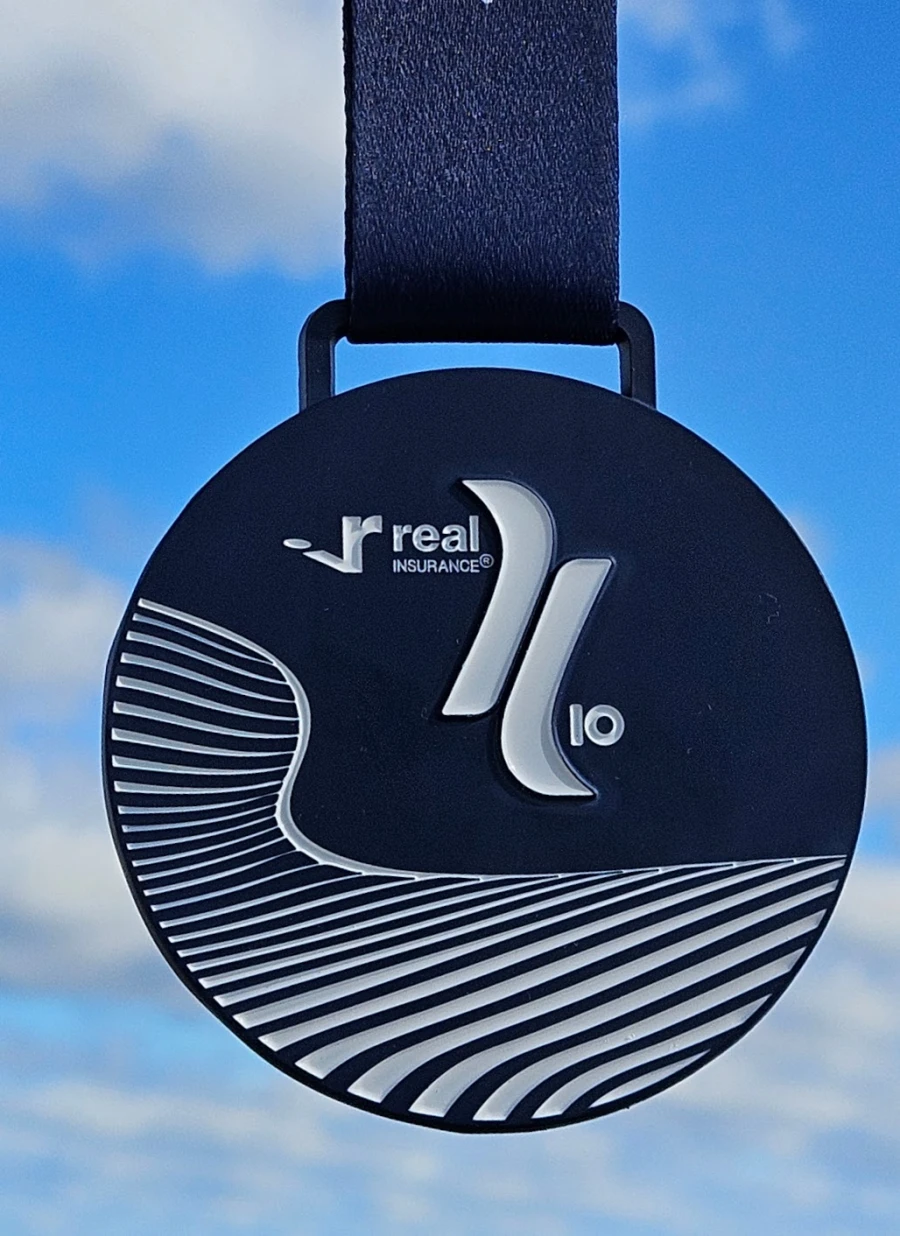
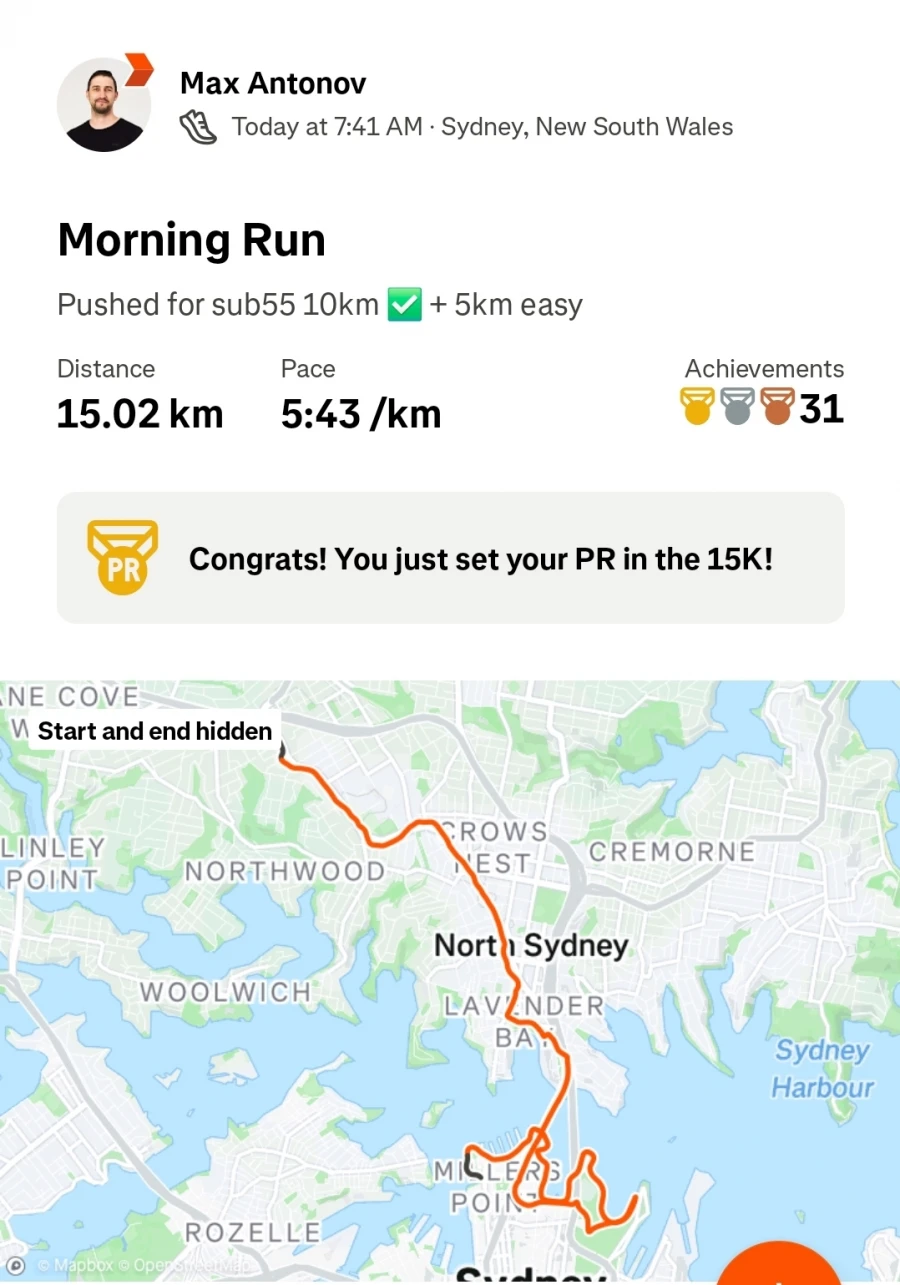
Got wrecked in the Blue Mountains over the weekend - legs felt like bricks. So hitting a PB for 15Ks with sub-6:00 pace felt massive. Nearly 200 metres of elevation in there too.
That's a big one for me. Not just the numbers - the confidence it gave me after a rough session.
These are the moments that build the legs for UTA50 - and the mindset for everything else.


35km in the bank. But this one hurt.
Started fresh. Finished wrecked. 1,640m of elevation over 6 hours stripped me down. Legs gave out before the mind did - but only just.
UTA50 is another 15km longer, with almost 1,000m more elevation. Today's effort wasn't even the full thing. And it still broke me. If I hit that wall during the real race, I won't just slow down. I'll stop.
That's the scary bit.
But also the point.
The course doesn't lie. You either show up prepared or get chewed up. Today didn't break me. It just showed me where the cracks are. And that's exactly what prep is for.
Every painful step now is insurance for race day.

My wife and I watched Black Mirror S7E1 "Common People" last night. It felt less like fiction and more like a documentary. You could swap the brain implant with any early-stage product and the pattern is the same: from solving a problem to squeezing value.
You don't start out building dystopia.
You start with a dream. To help someone. Maybe save a life. Not growth. Not virality. Just impact.
It begins with something human. “I want to help people.” Real pain. Real need. Strong emotional pull.
So you build. Scrappy MVPs. Test empathy. Pitch it as perspective-shifting. Maybe even healing.
Early adopters rave. Investors lean in. Retention climbs. Virality kicks. So you optimise.
Empathy turns to entertainment. Immersion becomes addiction. Exploration turns into extraction.
“Total immersion” becomes your edge. Richer data. Deeper sync. Sharper fidelity. The product gets better. But better for who?
Then come the tiers. Free. Plus. Premium. Ultra. More access. More control. More fun.
Lower tiers don't get less. They just get worse. Ads. Friction. Withdrawal.
The customer's life becomes content. Their pain becomes product.
Then the customer disappears. No roadmap. No experience tracking. No consent. Because they're not the customer. They're the cost.
You're not evil. You're just in growth mode. The sprint is full. The metrics are green. Legal said yes. And besides - it's working.
Dystopia doesn't crash through the door. It slips in quietly… while the dashboard stays green.

Hiring a Product Manager? Features don't tell you how they think. Trade-offs do.
“Design me a feature” is lazy. It rewards idea factories. It skips the messy bit. The hard decisions, the real trade-offs, the collaboration across disciplines. And most of the time, it's work for a designer, not a PM.
Great PMs don't need to be idea machines. They need to place good bets. People who know when to push, when to pause.
Want to spot a great PM? Ask about their past work. Zoom in on the messy bit. What changed because of them? What did they push for, protect or reshape? Where did they tilt the odds instead of following the script?
The best answers come from the hard parts - the tension and the feedback loops. The trade-offs and the moments when things weren't obvious. When the path wasn't clear but they still found a way forward. That's where the gold is. Not in ideas but in impact.
Real product work looks like wrestling with constraints, aligning the team, managing pressure and holding context across functions. It's pushing through ambiguity without defaulting to consensus. It's saying no more than yes. And it's knowing which bets matter and which don't.
PMs don't just ship features. They see through noise. They narrow scope. They frame decisions. Don't test them on what they can dream up. Test them on what they've already done.
Search
Explore pillars