I'm a father of 3 from Sydney, a product and technology leader. I write about leadership, product management, technology and the messy reality of making work work.
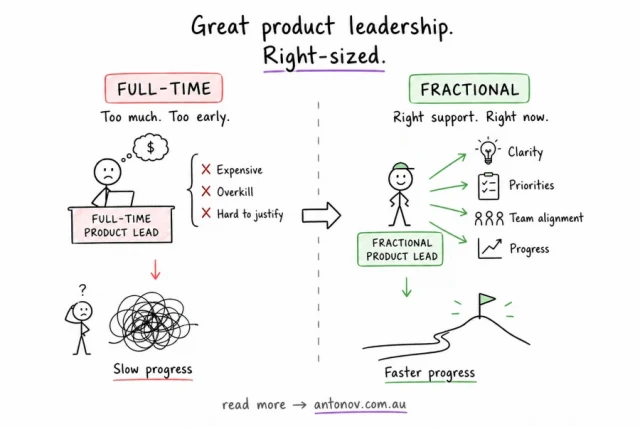
I'm currently building and experimenting with a mildly alarming number of things. I also work as a fractional product leader, stepping in where the founder or CEO is still carrying product decisions on their own, and offer 1:1 product leadership coaching for senior PMs and emerging product leaders. I founded SoundingBoard, practical peer exchange for product people. Connect via LinkedIn, or follow me on X.
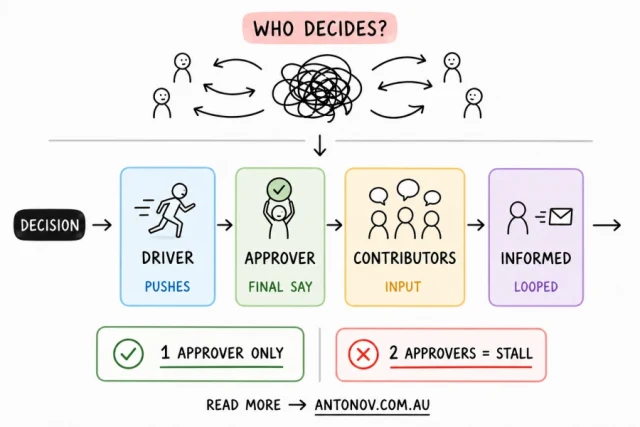
The best way to get alignment is for someone to own the call, make the decision, and move everyone forward. It doesn't come from talking things through forever.
Long discussions feel safe. They even feel (mistakenly) like progress. But they slow everything down. Like a slow-mo scene from The Matrix. I hate it.
Clear decisions are risky and a bit scary. But they give your team the direction it needs.
Do this If you want faster and cleaner decisions:
Subscribe to the best posts on product, strategy, and AI. Just one email a month.
Some organisations want innovation, but they don't want the risk. They need to show ROI before proceeding.
But that's the true cost of innovation - you don't know if it will result in anything. There's a chance, but it's low.
You can't test, learn, or grow without spending time/money. Without breaking things. Progress looks chaotic up close. And sometimes expensive.
Disagreement is proof you've hired thinkers, not AI bots. If everyone nods along, you've built a cult, not a team.
Debate, decide, act, and make a difference in the world.
Everything a CEO does can be boiled down to 3 main things: Setting direction, enabling people, and driving outcomes.
The best leaders know which of these matters most at any given time, and they shape their schedule around it.
Companies led by someone who understands that balance have a clear edge over those that don't.
When the newborn comes into your life, everything changes. It doesn't matter what your current habits are - your fitness, your diet, your time with your wife - it all kind of goes out the window. Everything starts shifting around the newborn: the schedule, the mayhem, the process of learning their personality and cues - are they hungry or just needy?
Then you start figuring out the schedule. In the first stage, you barely sleep, and both of you attend to the baby, which quickly becomes unsustainable. So you start adjusting, taking turns, shifting things around to make it work.
Everything shifts around the baby, and you end up giving up on the small things - even something as simple as going out for a walk, let alone exercising.
Two weeks in, though, you start to really enjoy the moment. You realise it's a new life - a new person with their own personality, thoughts, and habits. It's amazing to watch it unfold.
But it's also important not to forget everything else. Once you've got a bit more structure in your schedule, start bringing back those other habits - eating properly, going out, spending time with your wife, exercising, looking after yourself, and maybe spending a bit more time on your side projects too.
Only recently, I thought I didn't have time. I knew that would change soon, and I also knew I'd adapt - especially since I've done it twice before.
My third daughter (yep, I'm a girl dad) was recently born and already seems to be the boss.
In between naps, feeding, and endless nappy changes that look suspiciously like mustard, I'm doing a couple of extra things:
Leaders push for speed so hard they forget the basics - a clearly communicated direction.
Everyone understands the direction eventually...once it's downhill.
The way people in an organisation work together towards shared goals forms the core of its culture.
No shared goals? No shared culture. Just meetings with snacks.
The best PMs are detail-oriented.
Even when under pressure to start executing, they still do the work in the background to make sense of it. If it doesn't, they bring it up in a non-confronting, logical way.
I've seen big decisions being reversed because of that, saving the company tens of thousands of dollars that could have been lost by going in the wrong direction where the maths does not stack up.
Hold on to these PMs.
Guard time like budget...work expands to fill the day. Block focus hours. Lock family time. Prioritise exercise. Treat them as non-negotiable.
The best way to kill your product instincts is to outsource your customer research.
When you get answers neatly packaged in a fancy PDF with cool graphs and slick design, you feel good about it. It looks like the hardest part has been done, and you just need to look at the numbers and insights. On the surface.
As you go through the research prepared by someone else, you realise you only gain surface-level knowledge of the space.
Real research is about developing a good understanding of what your customers are experiencing - the small problems they face, along with all the nuances and frustrations.
You have to speak to them. No surveys or written responses will give you true insight into their challenges.
When you outsource research, someone else builds that understanding - not you.
Your product instincts start to fade over time.
Search